Wodurch wird die magnetische Flussverteilung von Magnetkugeln bestimmt?
Feb 05, 2026
Die magnetische Flussverteilung beschreibt, wie die Magnetfeldlinien um und in einem Magneten angeordnet sind. Sie beeinflusst direkt die Magnetfeldstärke, die Anziehungskraft und die Wechselwirkung des Magneten mit Objekten in seiner Nähe. Obwohl viele Menschen sich nur auf die Größe oder die Magnetstärke eines Magneten konzentrieren, hängt das tatsächliche magnetische Verhalten von einer Kombination aus strukturellen und Materialfaktoren ab.
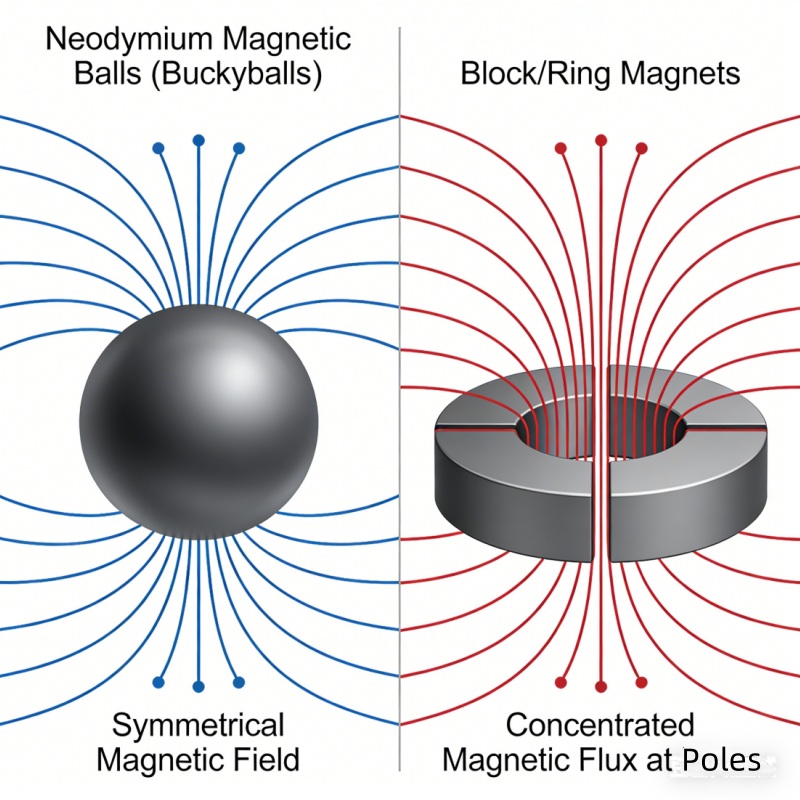
Der erste entscheidende Faktor ist die Form des Magneten. Die Geometrie beeinflusst die Verteilung der Magnetfeldlinien maßgeblich. Zum Beispiel Neodym-Magnetkugeln Kugelmagnete (auch bekannt als Fullerene) erzeugen ein symmetrisches Magnetfeld um ihre gesamte Oberfläche. Im Gegensatz zu Block- oder Ringmagneten, die den magnetischen Fluss an planaren Polen konzentrieren, verteilen Kugelmagnete den magnetischen Fluss gleichmäßig in alle Richtungen. Diese gleichmäßige Flussverteilung ermöglicht eine nahtlose Verbindung aus jedem Winkel.
Der zweite Schlüsselfaktor ist die Magnetisierungsrichtung. In den meisten Neodym-Magnetkugeln verläuft die Magnetisierung axial, d. h. die Magnetpole befinden sich auf gegenüberliegenden Seiten der Kugel. Trotz der Kugelform folgt die Ausrichtung des internen Magnetfelds einer definierten Achse. Diese interne Orientierung bestimmt, wie sich mehrere Magnetkugeln beim Zusammenfügen anordnen. Eine konsistente Magnetisierungsrichtung gewährleistet vorhersagbare Kettenstrukturen, Gitterstrukturen und geometrische Kombinationen.
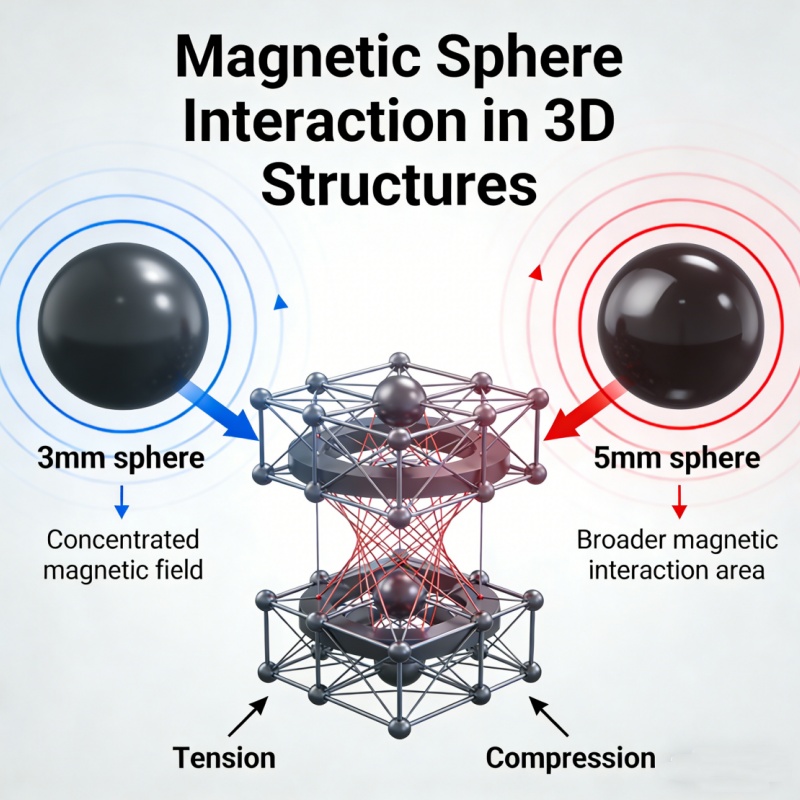
Die Größe des Magneten spielt ebenfalls eine wichtige Rolle. Kleine MagnetkugelnKleinere Kugeln, beispielsweise mit einem Durchmesser von 3 mm oder 5 mm, erzeugen ein konzentriertes, aber kompaktes Magnetfeld. Größere Kugeln hingegen erzeugen einen größeren Bereich magnetischer Wechselwirkung. Dieser Unterschied beeinflusst das Verhalten von Strukturen unter Zug- und Druckbelastung, insbesondere bei komplexen 3D-Strukturen.
Ein weiterer Faktor, der die magnetische Flussverteilung beeinflusst, ist die Materialqualität. Hochwertigere Neodym-Eisen-Bor-Legierungen weisen eine höhere Remanenz und eine höhere magnetische Flussdichte auf. Bei Magnetkugeln bedeutet dies eine stärkere Anziehung zwischen den einzelnen Kugeln, stabilere Strukturen und eine längere Haltbarkeit der zusammengesetzten Formen. Ein stärkerer magnetischer Fluss erfordert jedoch auch eine ausgewogene Konstruktion, um eine reibungslose Trennung und einen sicheren Betrieb zu gewährleisten.
Schließlich beeinflussen auch Abstand und Anordnung das Verhalten des Magnetfelds. Werden mehrere Magnetkugeln miteinander verbunden, interagieren ihre magnetischen Kreise. Magnetfeldlinien verbinden sich zwischen benachbarten Kugeln und bilden geschlossene Magnetschleifen. Diese Wechselwirkung erhöht die strukturelle Integrität und ermöglicht es den Magnetkugeln, flexible und dennoch stabile Strukturen zu bilden.
Das Verständnis der magnetischen Flussverteilung erklärt die Vielseitigkeit von Magnetkugeln. Ihre Kugelform, die kontrollierte Magnetisierung, die Materialfestigkeit und die interagierenden Magnetkreise bilden zusammen ein dynamisches Magnetsystem. Anstatt als isolierte Magnete zu fungieren, agieren sie als miteinander verbundene magnetische Einheiten, die unzählige geometrische Formen ermöglichen und dabei eine stabile magnetische Leistung beibehalten.
Wenn Sie Magnetkugeln für Bildungs-, Kreativ- oder Werbezwecke suchen, ist die Wahl der richtigen Größe, Qualität und Beschichtung entscheidend. Für weitere Informationen zu Spezifikationen, Anpassungsmöglichkeiten oder Großbestellungen kontaktieren Sie uns bitte. Kontaktieren Sie uns um Ihre Anforderungen im Detail zu besprechen.
Wenn Sie an unseren Produkten interessiert sind und weitere Einzelheiten erfahren möchten, hinterlassen Sie bitte hier eine Nachricht. Wir werden Ihnen so schnell wie möglich antworten.


 en
en de
de Hefei Super Electronics Co., Ltd.



 IPv6-Netzwerk unterstützt