Wie beeinflusst die Dichte von Neodym-Magneten die Leistung?
Jan 13, 2026
Bei der Bewertung von Neodym-Magneten konzentrieren sich die meisten Käufer auf die Magnetqualität, die Zugfestigkeit oder die Beschichtung und vernachlässigen dabei oft die Magnetdichte. Tatsächlich spielt die Magnetdichte eine entscheidende Rolle für die magnetischen Eigenschaften, die mechanische Festigkeit und die Langzeitstabilität. Das Verständnis des Einflusses der Magnetdichte auf die Leistung hilft Ingenieuren und Käufern, fundiertere Material- und Konstruktionsentscheidungen zu treffen.
Was ist Magnetdichte?
Die magnetische Dichte bezeichnet die Masse pro Volumeneinheit eines Magneten und wird typischerweise in g/cm³ angegeben. gesinterte Neodym-Eisen-Bor-MagneteDie Dichte steht in engem Zusammenhang mit der Kompaktheit der inneren Kornstruktur nach dem Sintern. Eine höhere Dichte bedeutet im Allgemeinen eine geringere innere Porosität und ein gleichmäßigeres Mikrogefüge.
Dichte und magnetische Eigenschaften
Bei Neodym-Magneten hängen die magnetischen Eigenschaften von der Anordnung und Wechselwirkung der magnetischen Domänen im Material ab. Eine höhere Dichte ermöglicht eine engere Ausrichtung dieser Domänen und verbessert so die Kontinuität des magnetischen Flusses. Daher weisen Magnete mit höherer Dichte im Allgemeinen bessere magnetische Eigenschaften auf, wie beispielsweise eine höhere Remanenz (Br) und eine stabilere Leistung.
Magnete mit geringer Dichte können winzige Hohlräume enthalten, die beim Pressen oder Sintern entstehen. Diese Hohlräume können die magnetischen Flusswege blockieren und dadurch die effektive Magnetstärke und -konsistenz, insbesondere bei Präzisionsanwendungen, leicht verringern.
Dichte und mechanische Eigenschaften
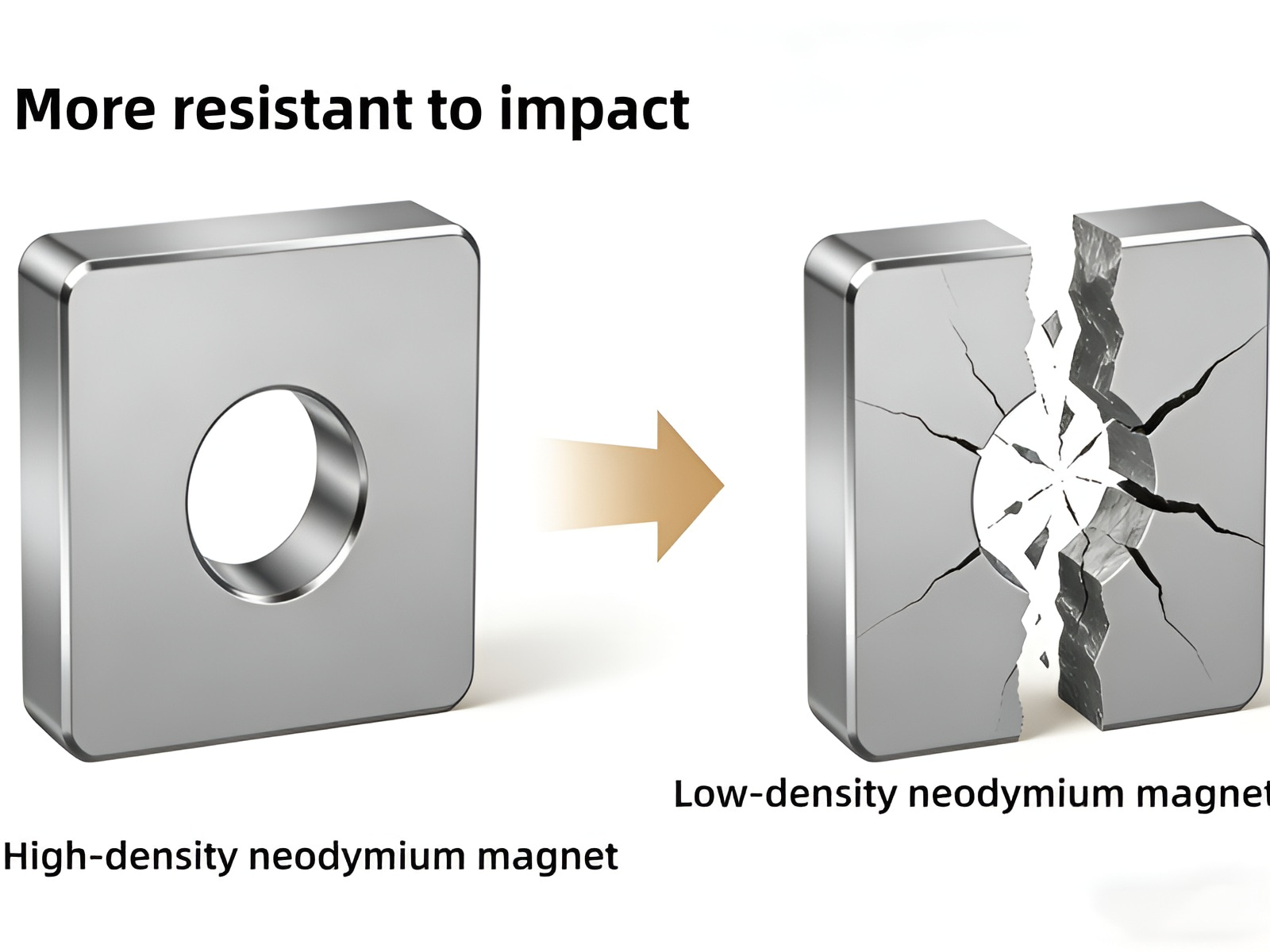
Die Dichte beeinflusst auch die mechanischen Eigenschaften von Neodym-Magneten. Magnete mit höherer Dichte weisen tendenziell eine bessere strukturelle Integrität auf und sind widerstandsfähiger gegen Stöße oder Risse bei der Handhabung und Montage. hochwertige Neodym-Magnete Da sie von Natur aus spröde sind, reduziert eine gleichmäßige Dichte die Schwachstellen im Material und verbessert so die Gesamtzuverlässigkeit.
Auswirkungen auf die Anwendungsleistung
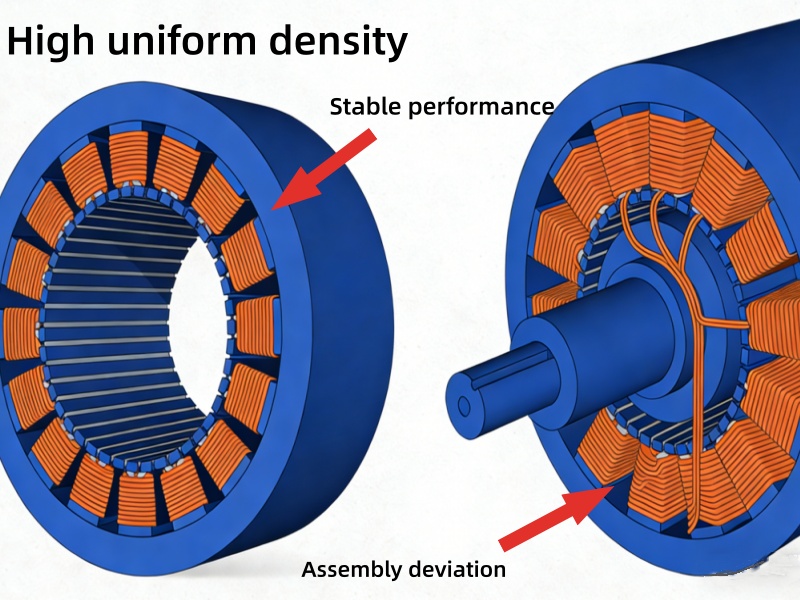
In praktischen Anwendungen beeinflusst die Dichte die Zuverlässigkeit von Magneten unter Last, Vibrationen oder wiederholter Nutzung. Beispielsweise trägt eine gleichmäßige Dichte in Motoren, Sensoren oder magnetischen Bauteilen zu vorhersagbaren magnetischen Eigenschaften und engeren Leistungstoleranzen bei. Umgekehrt kann eine ungleichmäßige Dichte zu Chargenschwankungen führen und die Montagegenauigkeit sowie die Produktkonsistenz beeinträchtigen.
Die Magnetdichte steht in engem Zusammenhang mit der Bearbeitungsqualität. Magnete mit höherer Dichte ermöglichen in der Regel sauberere Schnitte und Schleifvorgänge und tragen somit zu engeren Maßtoleranzen in der Produktion bei.
Abschluss
Obwohl die Magnetdichte nicht immer separat angegeben wird, ist sie ein grundlegender Indikator für die Qualität von Neodym-Magnetmaterialien. Eine höhere Dichte führt zu stärkeren magnetischen Eigenschaften, besserer struktureller Stabilität und einer konstanteren Leistung in praktischen Anwendungen. langlebige, starke Neodym-MagneteKäufer sollten neben Magnetgüte, Beschichtung und Betriebsbedingungen auch die Magnetdichte berücksichtigen.
Wenn Sie an unseren Produkten interessiert sind und weitere Einzelheiten erfahren möchten, hinterlassen Sie bitte hier eine Nachricht. Wir werden Ihnen so schnell wie möglich antworten.


 en
en de
de Hefei Super Electronics Co., Ltd.



 IPv6-Netzwerk unterstützt