Wie beeinflusst die Dicke eines Neodym-Magneten die Anziehungskraft?
Mar 05, 2026
Bei der Auswahl industrielle Neodym-MagneteViele Käufer konzentrieren sich primär auf den Durchmesser oder die Gesamtgröße. Die Magnetdicke ist jedoch ein weiterer entscheidender Faktor, der die Anziehungskraft maßgeblich beeinflusst. Das Verständnis, wie die Dicke die magnetischen Eigenschaften beeinflusst, hilft Ingenieuren und Käufern, den am besten geeigneten Magneten für eine bestimmte Anwendung auszuwählen.
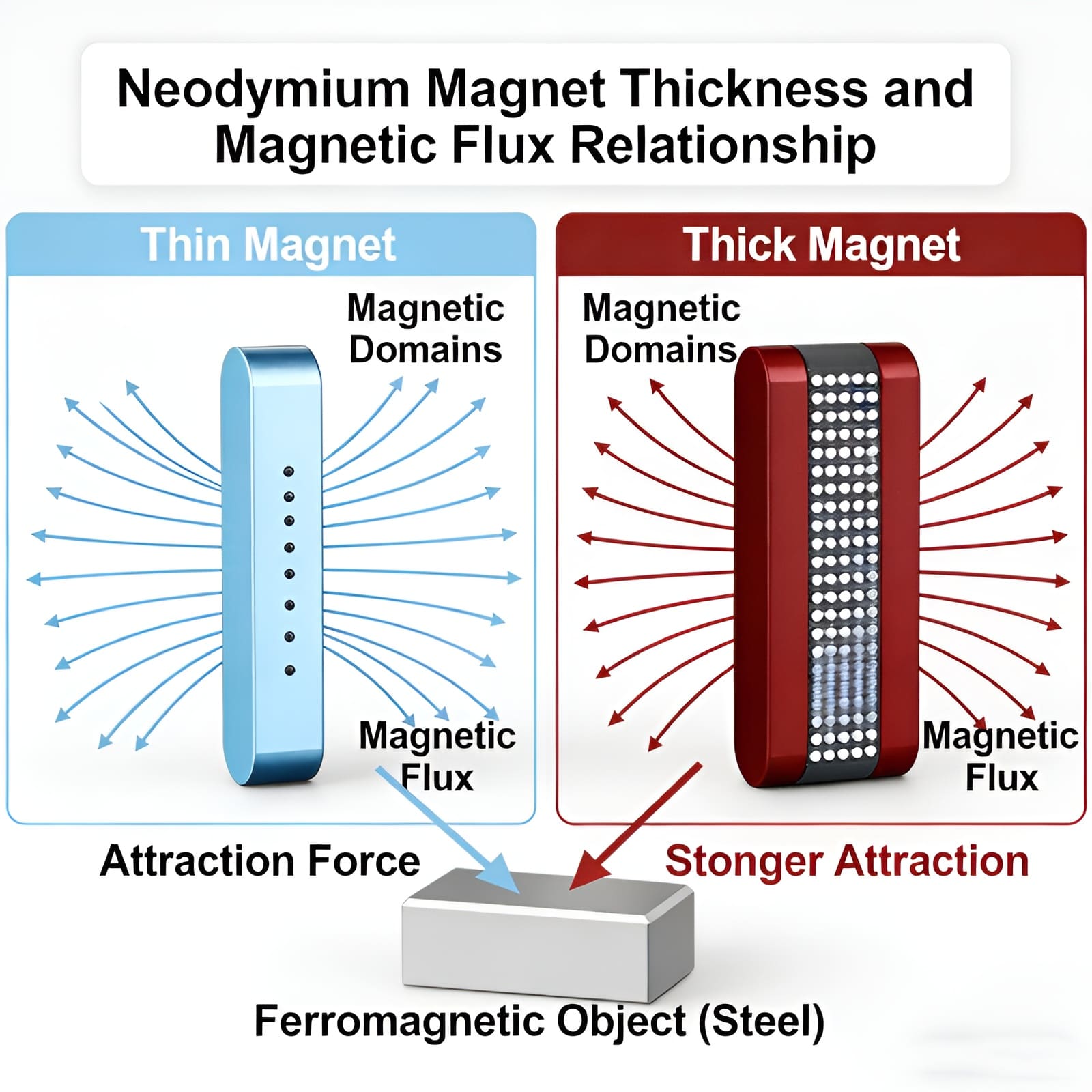
Neodym-Magnete erzeugen Magnetismus durch die Anordnung magnetischer Domänen im Material. Je dicker der Magnet, desto mehr magnetisches Material kann zur Unterstützung des internen Magnetfelds verwendet werden. Daher erzeugen dickere Magnete typischerweise einen stärkeren magnetischen Fluss an der Oberfläche, wodurch die Anziehungskraft des Magneten auf ferromagnetische Objekte wie Stahl direkt verstärkt wird.
Tatsächlich ermöglicht eine größere Dicke des Magneten, dass sich das Magnetfeld weiter von der Oberfläche ausdehnt. Dünne Magnete mögen zwar über kurze Distanzen stark erscheinen, doch ihre Magnetfeldstärke nimmt schnell ab. Dickere Magnete hingegen erzeugen ein stabileres Magnetfeld und bieten selbst bei geringen Abständen zwischen Magnet und Zieloberfläche eine stärkere Anziehungskraft. Daher ist die Magnetdicke besonders wichtig bei Anwendungen mit Beschichtungen, Lackschichten oder kleinen Luftspalten.
Zum Beispiel, Topf-Neodym-Magnete Dickere Magnete werden häufig in Montagesystemen, Magnethaken oder Magnetfüßen eingesetzt, um eine höhere Tragfähigkeit zu erzielen. In Industrieanlagen und Automatisierungsgeräten gewährleisten sie eine zuverlässige Positionierung oder Haltekraft, selbst bei Vibrationen oder Bewegungen. Ebenso kann bei magnetischen Bauteilen in Motoren, Sensoren oder elektronischen Geräten eine präzise Steuerung der Magnetdicke erforderlich sein, um den Magnetkreis zu optimieren.
Dickere Magnete bedeuten jedoch nicht immer eine bessere Leistung. Die Haltekraft eines Magneten wird auch von Faktoren wie Durchmesser, Magnetisierungsklasse, Magnetisierungsrichtung und Oberflächenbeschaffenheit beeinflusst. Ist die Stahloberfläche dünn oder uneben, kann die zusätzliche Magnetkraft eines dickeren Magneten möglicherweise nicht voll ausgeschöpft werden. In manchen Fällen ist es effektiver, den Magnetdurchmesser zu erhöhen, als lediglich die Dicke.
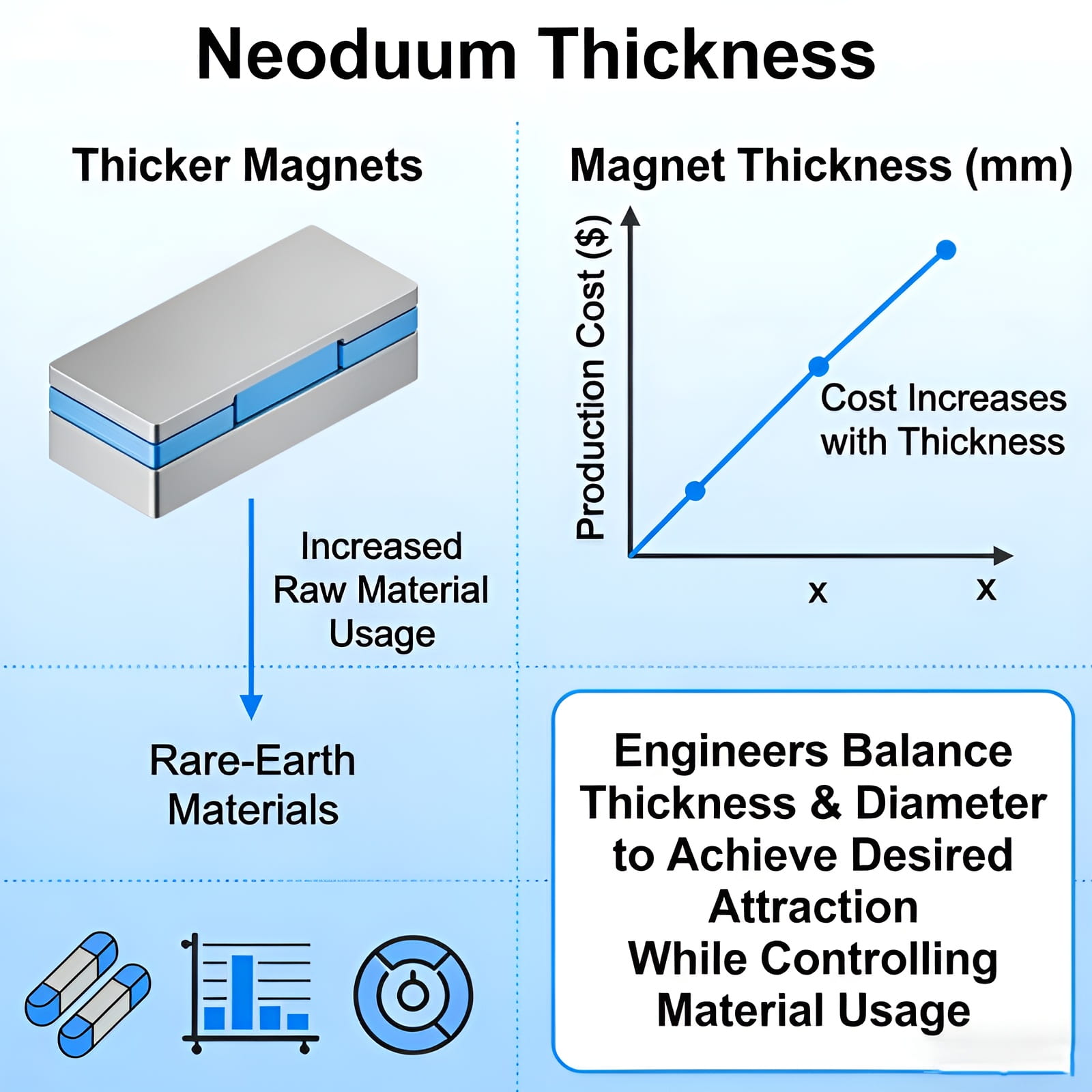
Ein weiterer wichtiger Aspekt ist die Wirtschaftlichkeit. Da Neodym-Magnete aus Seltenerdmetallen bestehen, benötigen dickere Magnete mehr Rohmaterial, was die Produktionskosten erhöht. Ingenieure wägen daher üblicherweise Dicke und Durchmesser des Magneten ab, um die gewünschte Anziehungskraft zu erzielen und gleichzeitig den Materialverbrauch und die Gesamtprojektkosten zu kontrollieren.
Zusammenfassend lässt sich sagen, dass die Magnetdicke eine entscheidende Rolle für die Anziehungskraft und die Stabilität des Magnetfelds spielt. Dickere Magnete bieten in der Regel eine stärkere und zuverlässigere Anziehung, insbesondere bei Anwendungen mit kleinen Spalten oder Beschichtungen. Durch sorgfältiges Abwägen der Magnetdicke mit anderen Designparametern können Anwender die optimale Magnetdicke auswählen. starke Neodym-Magnete mit der besten Leistung, um ihren spezifischen Bedürfnissen gerecht zu werden.
Wenn Sie an unseren Produkten interessiert sind und weitere Einzelheiten erfahren möchten, hinterlassen Sie bitte hier eine Nachricht. Wir werden Ihnen so schnell wie möglich antworten.


 en
en de
de Hefei Super Electronics Co., Ltd.



 IPv6-Netzwerk unterstützt