Wie man die richtige NdFeB-Magnetqualität auswählt
Sep 03, 2026
Neodym-Eisen-Bor-Magnete sind bekannt für ihre hohe magnetische Stärke, ihre kompakte Größe und ihre hervorragende Leistung. Allerdings ist die Wahl der richtigen NdFeB-Magnetsorte entscheidend für eine zuverlässige Leistung und Kosteneffizienz. Bei Sorten von N35 bis N52 und Hochtemperatursorten wie N35H, N42SH und N38UH – wie finden Sie den richtigen Magneten für Ihre Anwendung?
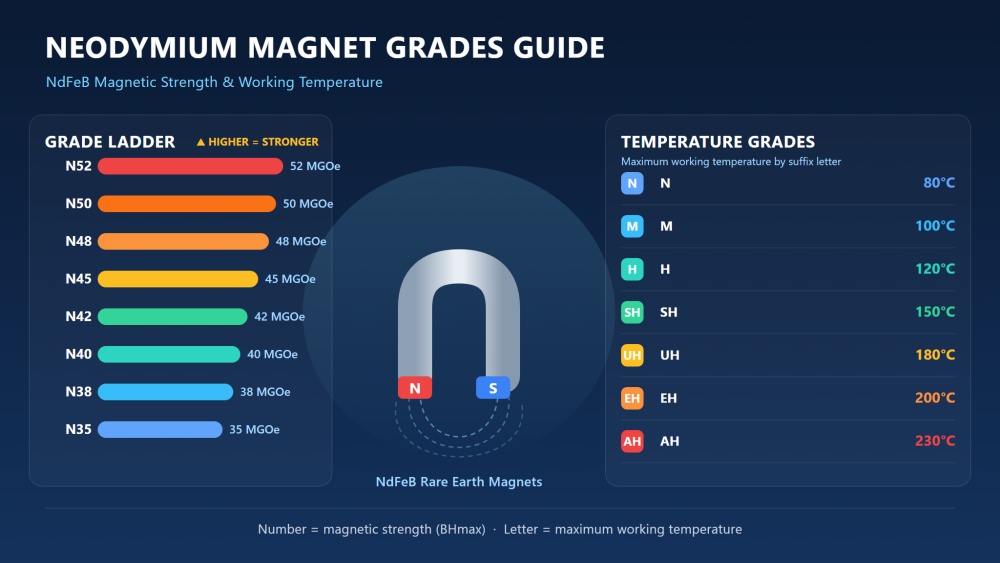
Die erste Zahl in einer NdFeB-Magnetgüteangabe, wie z. B. N35, N42 oder N52, gibt in erster Linie dessen Güteklasse an. maximales Energieprodukt (BHmax)Diese Zahl steht in Zusammenhang mit der magnetischen Leistung des Magneten. Im Allgemeinen bedeutet eine höhere Zahl einen stärkeren Magneten, wenn man Magnete gleicher Größe und Form vergleicht.
Die Temperatur ist ein weiterer wichtiger Faktor bei der Auswahl gesinterter NdFeB-MagnetStandardqualitäten eignen sich typischerweise für Anwendungen bei relativ moderaten Temperaturen. Wenn der Magnet erhöhten Temperaturen ausgesetzt sein soll, kann eine Hochtemperaturqualität erforderlich sein.
Güteklassen mit Suffixen wie H, SH, UH, EH und AH sind für eine verbesserte Beständigkeit gegen Entmagnetisierung bei höheren Betriebstemperaturen ausgelegt.
Berücksichtigen Sie die erforderliche Magnetkraft
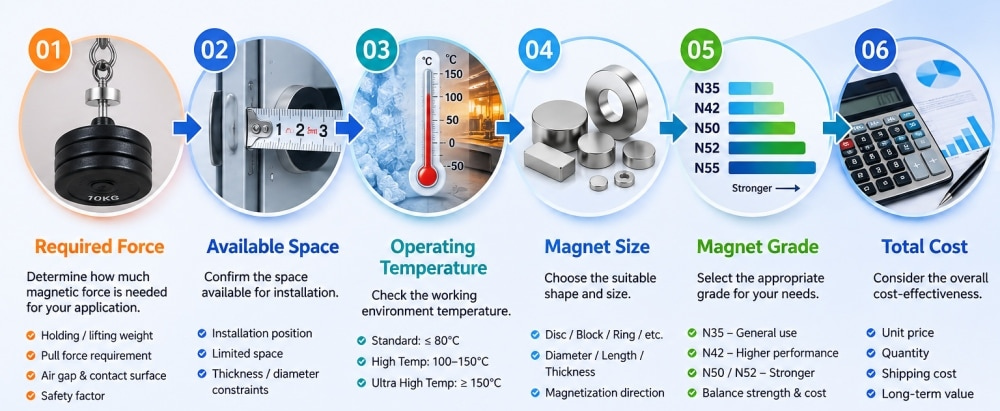
Die Magnetstärke allein bestimmt nicht die tatsächliche Haltekraft eines Magneten. Bevor Sie einen NdFeB-Magneten auswählen, sollten Sie zunächst feststellen, wie viel Magnetkraft Ihre Anwendung tatsächlich benötigt.
Folgende Faktoren sollten berücksichtigt werden:
• Zuladungsgewicht:Wie viel Gewicht muss der Magnet halten oder tragen?
• Größe und Form des Magneten: Durch Vergrößerung des Durchmessers, der Dicke oder der Kontaktfläche lässt sich die Haltekraft verbessern, ohne dass unbedingt eine höhere Güteklasse verwendet werden muss.
• Magnetisierungsrichtung:Die Magnetisierungsrichtung sollte der Art und Weise entsprechen, wie die magnetische Kraft in der Anwendung benötigt wird.
•Kontaktfläche:Eine vollflächige, ebene Kontaktfläche bietet in der Regel eine stärkere Haltekraft als eine gekrümmte oder unebene Oberfläche.
Wenn zum Beispiel ein N35 Neodym-Magnet Wenn die Haltekraft nicht ausreicht, ist ein direktes Upgrade auf N52 nicht unbedingt erforderlich. Durch Vergrößerung der Größe oder Dicke des Magneten lässt sich die erforderliche Kraft möglicherweise wirtschaftlicher erzielen.
Für Anwendungen wie als magnetische Befestigungen, Schrankverschlüsse, Sensoren, Hebevorrichtungen, Werbedisplays und Montagesysteme, Wir empfehlen, zuerst die erforderliche Zugkraft zu ermitteln und dann die passende Magnetqualität und -abmessungen auszuwählen.
Ausgewogenes Verhältnis zwischen Leistung und Kosten
Eine höhere NdFeB-Qualität bedeutet nicht zwangsläufig eine bessere oder kostengünstigere Lösung. Die richtige Wahl ist die niedrigste Qualität, die die Anforderungen Ihrer Anwendung zuverlässig erfüllt.
Wenn hingegen der Installationsraum begrenzt ist und eine starke Magnetkraft erforderlich ist, kann man mit einem höherwertigen Magneten wie N48, N50 oder N52 die gewünschte Leistung mit einem kleineren Magneten erzielen.
Beim Vergleich verschiedener Lösungen sollten Sie Folgendes berücksichtigen:
Die wirtschaftlichste Lösung ist nicht unbedingt der Magnet mit dem niedrigsten Stückpreis. Ein geeigneter Magnet kann die benötigte Menge, den Installationsplatz und die Ersatzkosten reduzieren und gleichzeitig eine zuverlässige Leistung gewährleisten.
Auswahl eines Neodym-Magnetqualität sollte auf Ihren vollständigen Anwendungsanforderungen basieren, einschließlich Magnetkraft, Betriebstemperatur, verfügbarem Platz, Magnetgröße und Kosten. Die höchste Qualitätsstufe ist nicht immer die beste Wahl – die richtige Qualitätsstufe ist diejenige, die zuverlässige Leistung zu angemessenen Kosten bietet.
Sie sind sich nicht sicher, welche NdFeB-Magnetqualität für Ihre Anwendung die richtige ist? Wir können Ihnen Muster zum Testen zur Verfügung stellen, damit Sie die magnetische Leistung, Größe, Beschichtung und Passform in Ihrer tatsächlichen Anwendung überprüfen können, bevor Sie eine Großbestellung aufgeben.
Wenn Sie an unseren Produkten interessiert sind und weitere Einzelheiten erfahren möchten, hinterlassen Sie bitte hier eine Nachricht. Wir werden Ihnen so schnell wie möglich antworten.


 en
en de
de Hefei Super Electronics Co., Ltd.


 IPv6-Netzwerk unterstützt