In den letzten Jahren hat die Preisgestaltung von Neodym-Magneten zunehmend unter Schwankungen auf den Rohstoffmärkten gelitten. Im Gegensatz zu vielen herkömmlichen Industriekomponenten NdFeB-Dauermagnete Sie sind stark von Seltenerdelementen wie Neodym und Praseodym (NdPr) abhängig, wodurch ihre Kostenstruktur eng mit der Dynamik der vorgelagerten Materialströme verknüpft ist.
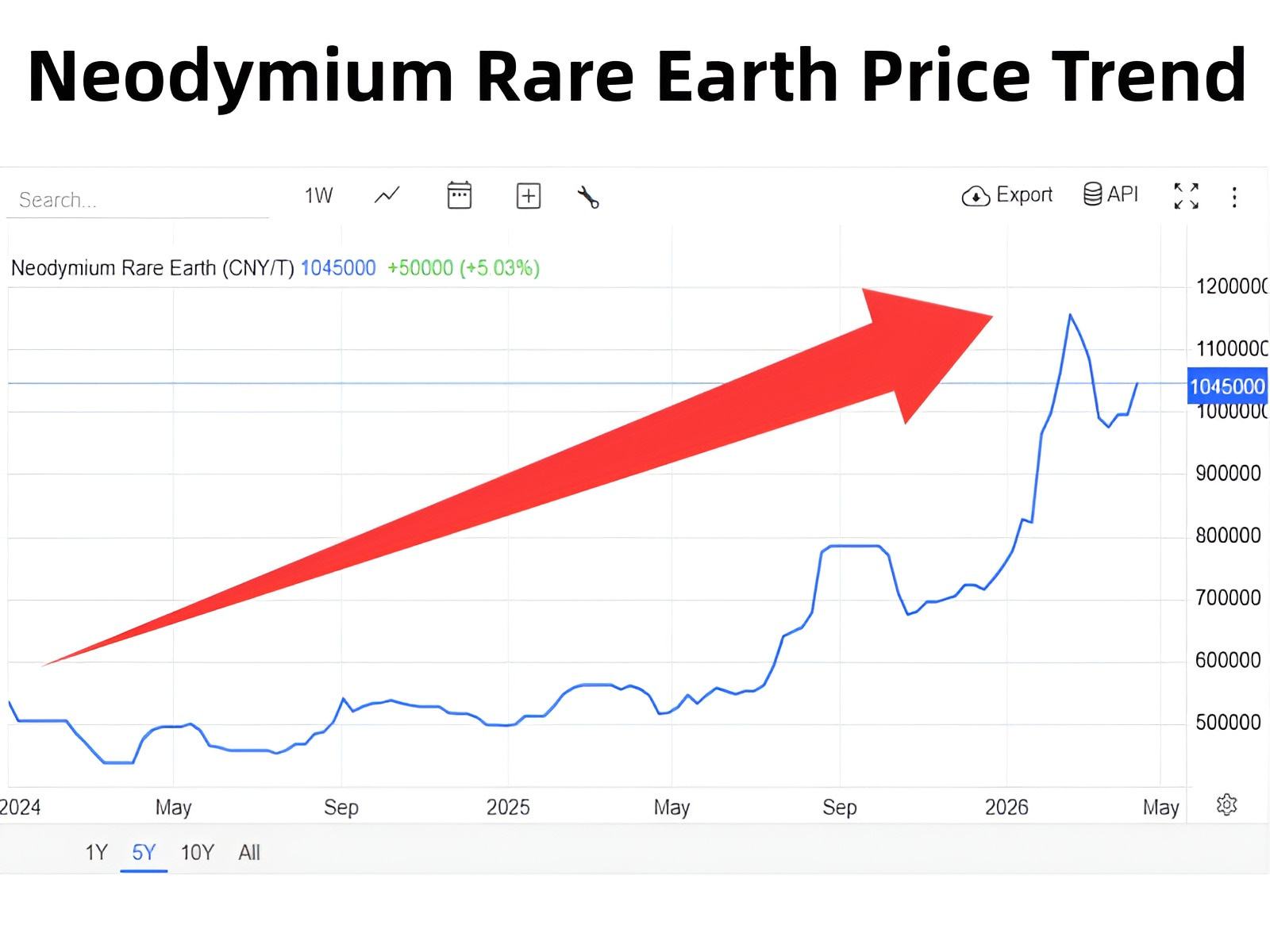
Einer der direktesten Einflussfaktoren ist die Preisvolatilität der Seltenen Erden selbst. Die Preise für Neodym beispielsweise sind im Jahresvergleich deutlich gestiegen und reagieren weiterhin sehr empfindlich auf Ungleichgewichte zwischen Angebot und Nachfrage. Aktuelle Daten zeigen, dass die Neodympreise im Vergleich zu den Vorjahren immer noch deutlich höher liegen, was den anhaltenden Druck auf dem Rohstoffmarkt widerspiegelt. Diese Volatilität schlägt sich unmittelbar in den Produktionskosten von Magneten nieder, da Rohstoffe einen Großteil der gesamten Herstellungskosten ausmachen.
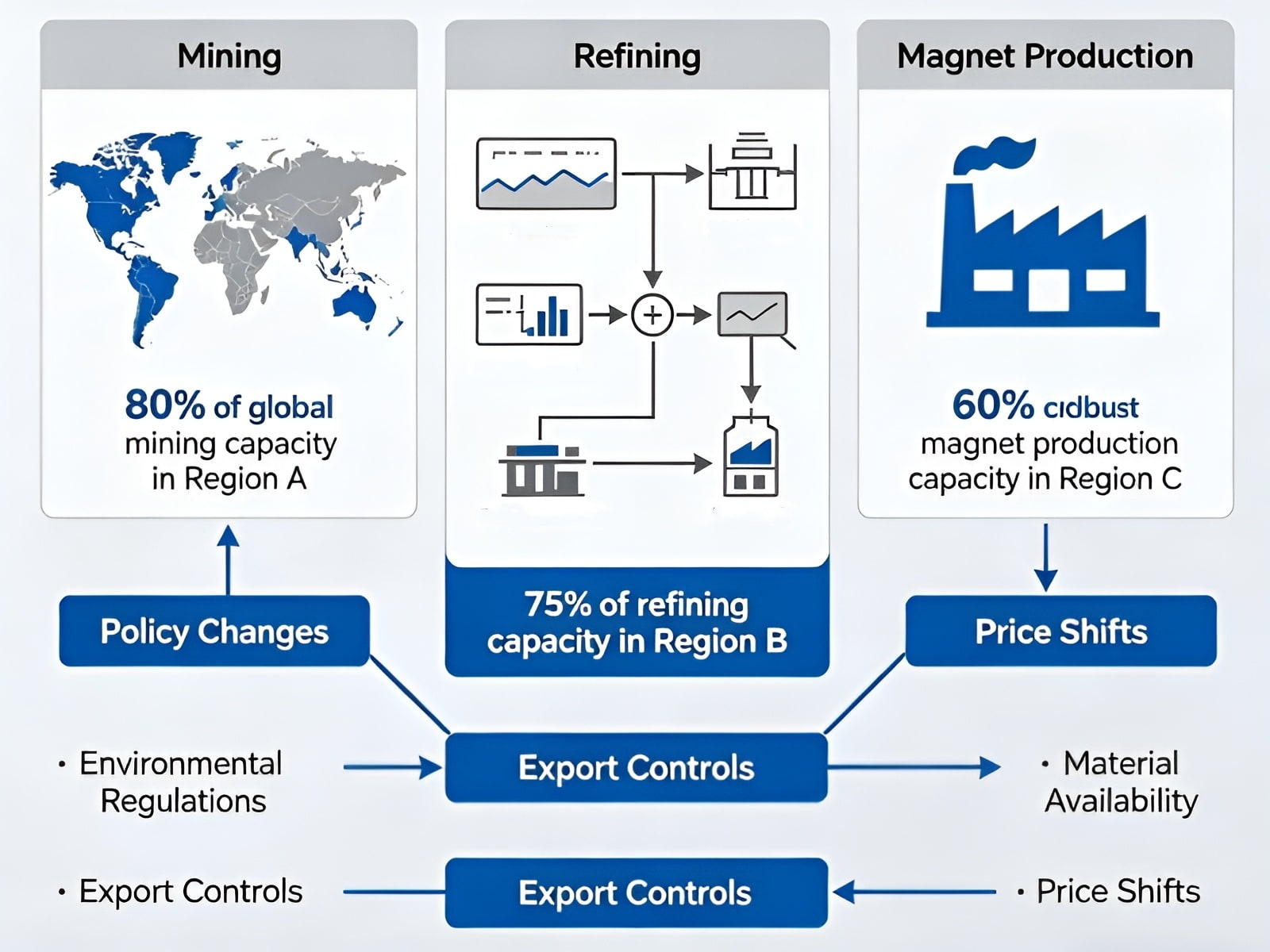
Neben dem Preisniveau spielt die Angebotskonzentration eine entscheidende Rolle. Die globale Wertschöpfungskette für Seltene Erden ist stark zentralisiert, wobei ein erheblicher Teil der Abbau-, Raffinerie- und Magnetproduktionskapazitäten auf wenige Regionen konzentriert ist. Diese strukturelle Besonderheit bedeutet, dass politische Änderungen, Umweltauflagen oder Exportkontrollen die Materialverfügbarkeit rasch beeinflussen und zu plötzlichen Preisschwankungen führen können.
Das Nachfragewachstum aus aufstrebenden Branchen verschärft diese Situation zusätzlich. Der Ausbau von Elektrofahrzeugen, erneuerbaren Energiesystemen und Automatisierungstechnologien hat den Verbrauch von Hochleistungs-Neodym-MagneteMit dem Wachstum dieser Branchen verschärft sich der Wettbewerb um Rohstoffe, was die Preise in die Höhe treibt und den Beschaffungsdruck entlang der gesamten Lieferkette erhöht.
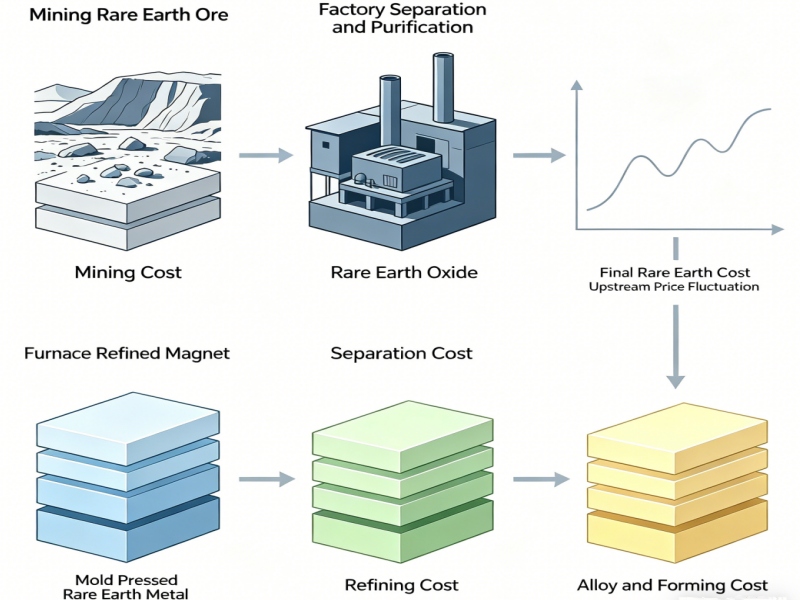
Ein weiterer wichtiger Faktor sind die mehrstufigen Verarbeitungskosten von Seltenerdmaterialien. Vom Abbau und der Trennung über die Metallraffination bis hin zur Legierungsherstellung – jeder Schritt erhöht Wertschöpfung und Kosten, bevor das Material zu fertigen NdFeB-Magneten verarbeitet wird. Dieser mehrstufige Produktionsprozess verstärkt die Auswirkungen von Preisänderungen in vorgelagerten Produktionsstufen und führt dazu, dass die Endpreise für Magnete empfindlicher ausfallen, als viele Käufer erwarten.
Zudem fördert die Marktunsicherheit ein vorsichtiges Beschaffungsverhalten. Käufer legen zunehmend Wert auf eine stabile Lieferkette und planbare Lieferzeiten anstatt sich allein auf den niedrigsten Preis zu konzentrieren. Diese Entwicklung spiegelt ein breiteres Verständnis dafür wider, dass Preisschwankungen keine isolierten Ereignisse sind, sondern Teil einer komplexen und vernetzten Lieferkette.
Aus praktischer Sicht ermöglicht das Verständnis des Einflusses von Rohstoffpreisen auf die Magnetkosten Käufern fundiertere Entscheidungen. Frühzeitige Auftragsplanung, flexible Beschaffungsstrategien und klare Kommunikation mit den Herstellern können dazu beitragen, die mit Preisschwankungen verbundenen Risiken zu minimieren.
Zusammenfassend lässt sich sagen, dass die Kosten von Neodym-Magneten nicht allein durch die Herstellung, sondern durch eine Kombination aus folgenden Faktoren bestimmt werden: Preisgestaltung für Seltene Erden-RohstoffeDie Lieferkettenstruktur und globale Nachfragetrends spielen dabei eine entscheidende Rolle. Da sich der Markt stetig weiterentwickelt, ist es unerlässlich, über diese zugrunde liegenden Faktoren informiert zu bleiben, um Kosteneffizienz und Versorgungssicherheit zu gewährleisten.


 en
en de
de Hefei Super Electronics Co., Ltd.





 IPv6-Netzwerk unterstützt